.jpg)

.jpg)
.jpg)



FOUR STEP TO FOOD SAFETY - CLEAN, SEPARATE, COOK and CHILL

S.S. Hospitality Solution Pvt. Ltd.- Narendra Adhikari
Following four simple steps at home—Clean, Separate, Cook, and Chill—can help protect you and your family from food poisoning.
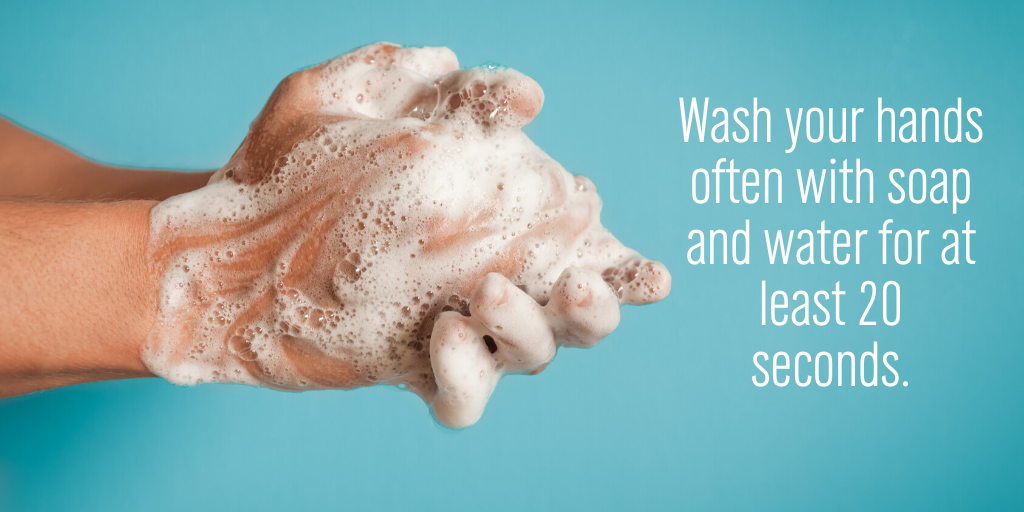
CLEAN: Wash your hands and surfaces often.
- Germs that cause food poisoning can survive in many places and spread around your kitchen.
- Wash your hands for at least 20 seconds with soap and warm or cold water before, during, and after preparing food and before eating.
- Always wash hands after handling uncooked meat, chicken and other poultry, seafood, flour, or eggs.
- Wash your utensils, cutting boards, and countertops with hot, soapy water after preparing each food item.
- Rinse fresh fruits and vegetables under running water.
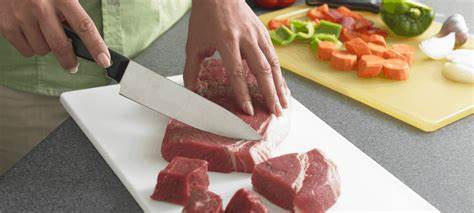
SEPARATE: Don’t cross-contaminate.
- Raw meat, poultry, seafood, and eggs can spread germs to ready-to-eat food unless you keep them separate.
- When grocery shopping, keep raw meat, poultry, seafood, and their juices away from other foods.
- Keep raw or marinating meat, poultry, seafood, and eggs separate from all other foods in the refrigerator. Store raw meat, poultry, and seafood in sealed containers or packages so the juices don’t leak onto other foods.
- Use one cutting board or plate for raw meat, poultry, and seafood and a separate cutting board or plate for produce, bread, and other foods that won’t be cooked.
- Do not wash raw meat, poultry, or eggs. Washing these foods can actually spread germs because juices may splash onto your sink or counters.
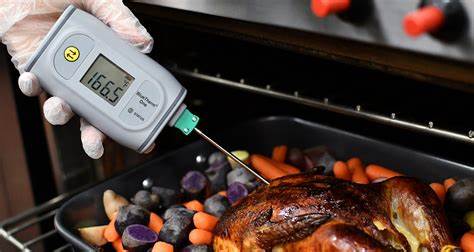
COOK to the right temperature.
- Food is safely cooked when the internal temperature gets high enough to kill germs that can make you sick. The only way to tell if food is safely cooked is to use a food thermometer. You can’t tell if food is safely cooked by checking its color and texture (except for seafood).
- Use a food thermometer to ensure foods are cooked to a safe internal temperature. Learn how to place the thermometer correctly in different food to get an accurate reading.
- Whole cuts of beef, veal, lamb, and pork, including fresh ham: 145°F (then allow the meat to rest for 3 minutes before carving or eating)
- Fish with fins: 145°F or cook until the flesh is opaque and separates easily with a fork
- Ground meats, such as beef and pork: 160°F
- All poultry, including ground chicken and turkey: 165°F
- Leftovers and casseroles: 165°F
- Check this chart for a detailed list of temperatures and foods, including shellfish and precooked ham.
- Microwave food thoroughly: Follow recommended cooking and standing times. Letting food sit for a few minutes after microwaving allows cold spots to absorb heat from hotter areas and cook more completely.
- Know your microwave’s wattage. Check inside the door, owner’s manual, or manufacturer’s website. If your microwave is high wattage (800 watts or more), use the minimum cooking time recommended. If it is low wattage (300–500 watts), use the maximum cooking time recommended.
- When reheating, use a food thermometer to make sure that microwaved food reaches 165°F.
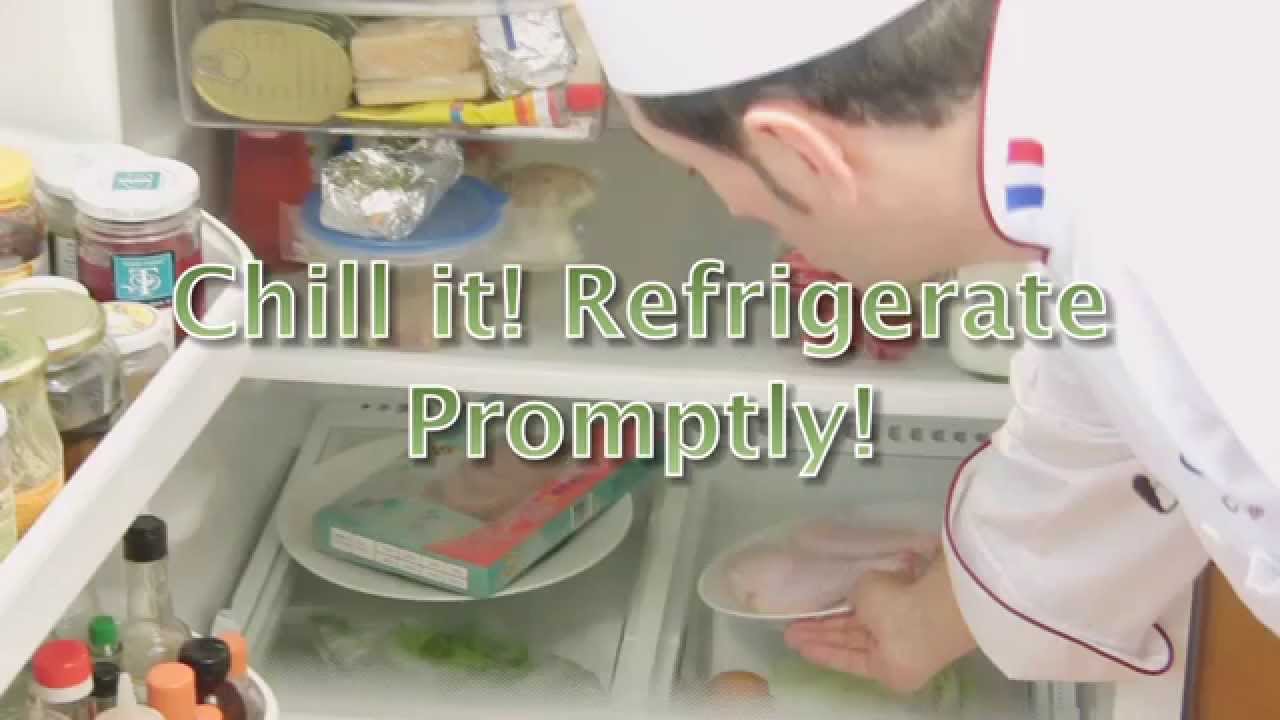
CHILL: Refrigerate promptly.
Bacteria can multiply rapidly if left at room temperature or in the “Danger Zone” between 40°F and 140°F.
- Keep your refrigerator at 40°F or below and your freezer at 0°F or below, and know when to throw food out before it spoils. If your refrigerator doesn’t have a built-in thermometer, keep an appliance thermometer inside it to check the temperature.
- Package warm or hot food into several clean, shallow containers and then refrigerate. It is okay to put small portions of hot food in the refrigerator since they will chill faster.